
The Seven Rila Lakes
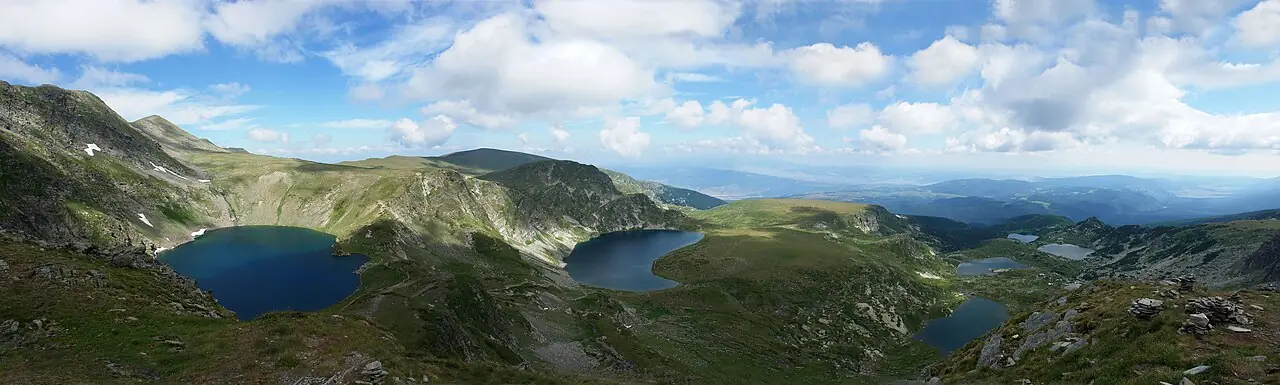
Seven glacial lakes stacked up a cirque, and the most photographed landscape in the country.
- Mountain
- Rila
- Elevation
- 2,500 m
- Time
- 3-5 hours
- Difficulty
- Easy
- Coordinates
- 42.20000, 23.31670
About this place
The lakes sit between 2,100 and 2,500 metres, each one named for its shape: the Tear for its clarity, the Eye for being the deepest cirque lake in Bulgaria at 37.5 metres, the Kidney, the Twin, the Trefoil, the Fish Lake and the Lower Lake. They drain one into the next down the cirque, which is why the circuit reads as a single staircase of water rather than seven separate places.
A chairlift from Pionerska removes about an hour of climbing and drops you near the Rila Lakes hut. From there the standard circuit runs up past the lower lakes to the viewpoint above the Tear, which is where every photograph you have seen was taken, then loops back down. It is not a difficult walk, but it is a high one, and the weather at 2,500 metres is not the weather at the car park.
This is also the most crowded place in the Bulgarian mountains. On a July or August weekend the path to the viewpoint can queue. The lakes are a sacred site for the Universal White Brotherhood, who gather here each August for the paneurhythmy — worth knowing if you arrive on the 19th and find several thousand people in white circling the Kidney.
When to go
At its best in June, July, August and September.
The Seven Lakes are usually walkable from early May. Musala is a summer objective, roughly late June to early October — north-facing gullies hold snow into July and people underestimate them every single year. Huts run a full service in July and August.
Getting there
Borovets is about 70 km from Sofia and the gondola takes you to Yastrebets at 2,369 m, which removes most of the climb to Musala. Panichishte, for the Seven Lakes, is roughly two hours by car. Govedartsi and Malyovitsa are the quieter way in.
Water
Plentiful. Rila is the source of the Iskar, Maritsa and Mesta, and there are springs at most huts. Take water from running sources above the huts rather than from the lakes.
What to watch out for
- Afternoon thunderstorms build over the massif on most summer days. Be off the summit ridge and descending by early afternoon — lightning on open ground is the real danger here, not the climb.
- Musala makes its own weather. Cloud can drop onto the summit in minutes and the marked route becomes hard to follow in whiteout.
Weather at this elevation
Weather at this elevation
Reading the forecast